Marc Rowan on how Apollo’s differentiated strategy was built for this moment.
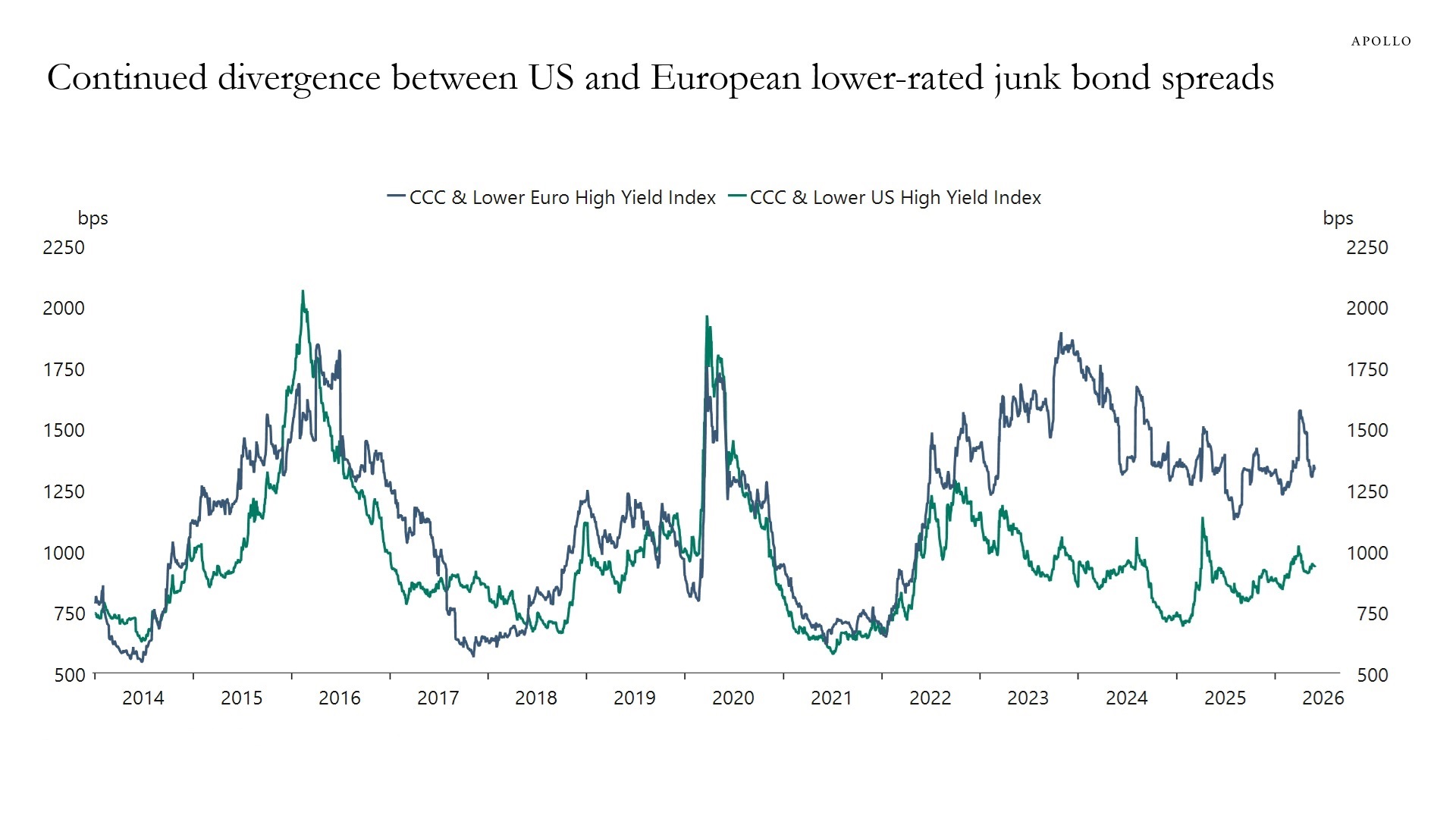
The 2022 gap between European and US CCC spreads has refused to close, driven by Europe’s harsher energy shock, weaker growth and lower government bond yields. This has been amplified by composition, as Europe’s CCC basket is concentrated in the very sectors the shock hit hardest, including energy-intensive industrials, chemicals, autos, real estate and retail.
Sources: ICE BofAML, Macrobond, Apollo Chief Economist
See important disclaimers at the bottom of the page.
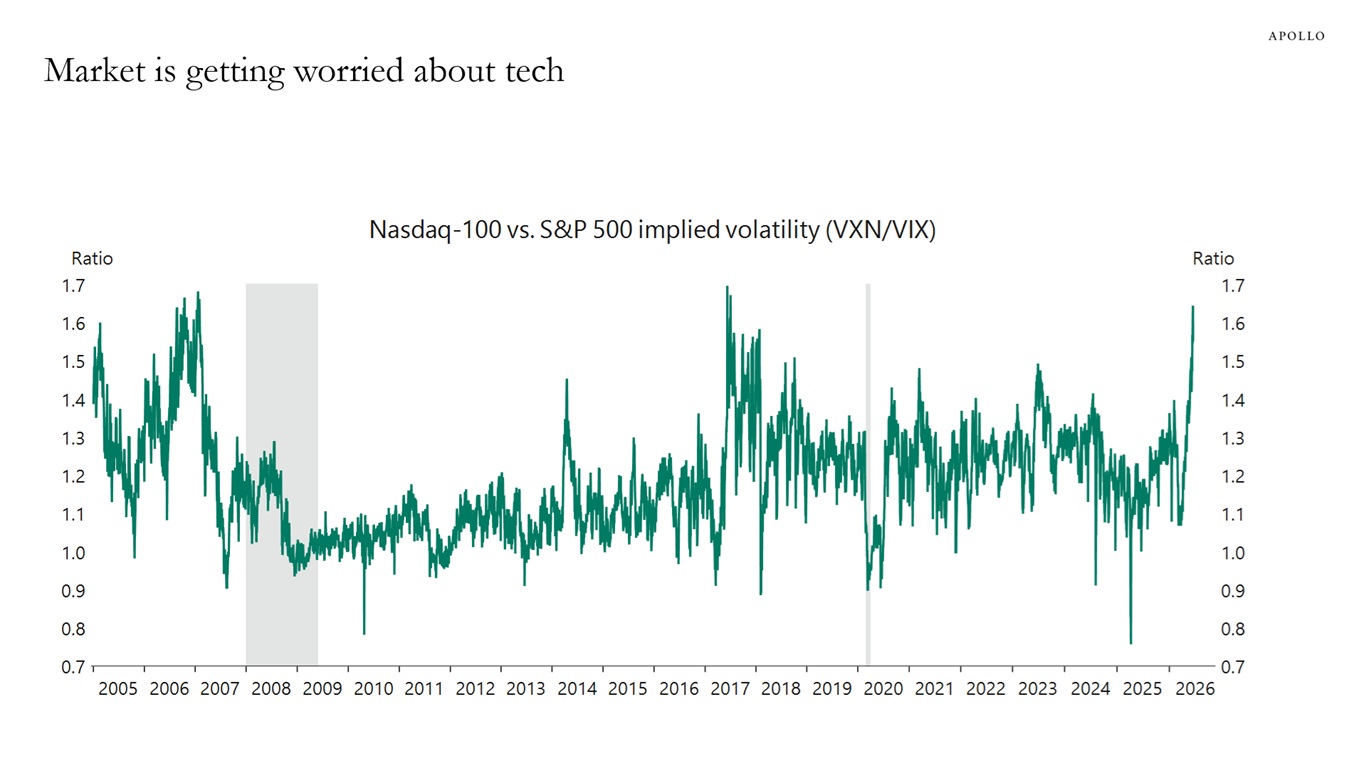
Nasdaq volatility relative to the S&P 500 has spiked to its highest level in many years. The jump reflects investors demanding far more protection on AI names than on the broad market, signaling that perceived market fragility is now heavily concentrated in growth stocks while overall S&P volatility stays relatively calm.
Sources: Bloomberg, Macrobond, Apollo Chief Economist
See important disclaimers at the bottom of the page.
June 20, 2026
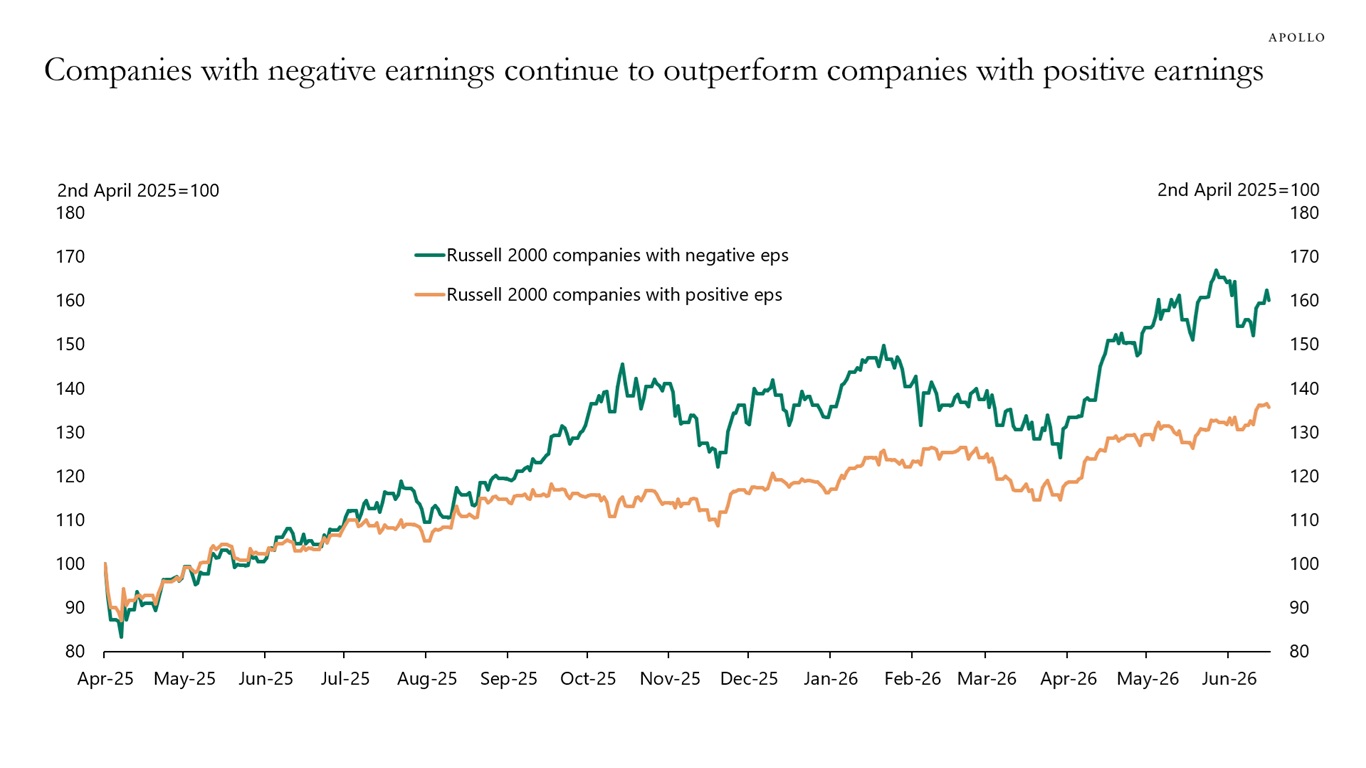
Something is broken in price discovery when companies with negative earnings keep outperforming companies with positive earnings, see chart below.
Sources: Bloomberg, Apollo Chief Economist
See important disclaimers at the bottom of the page.
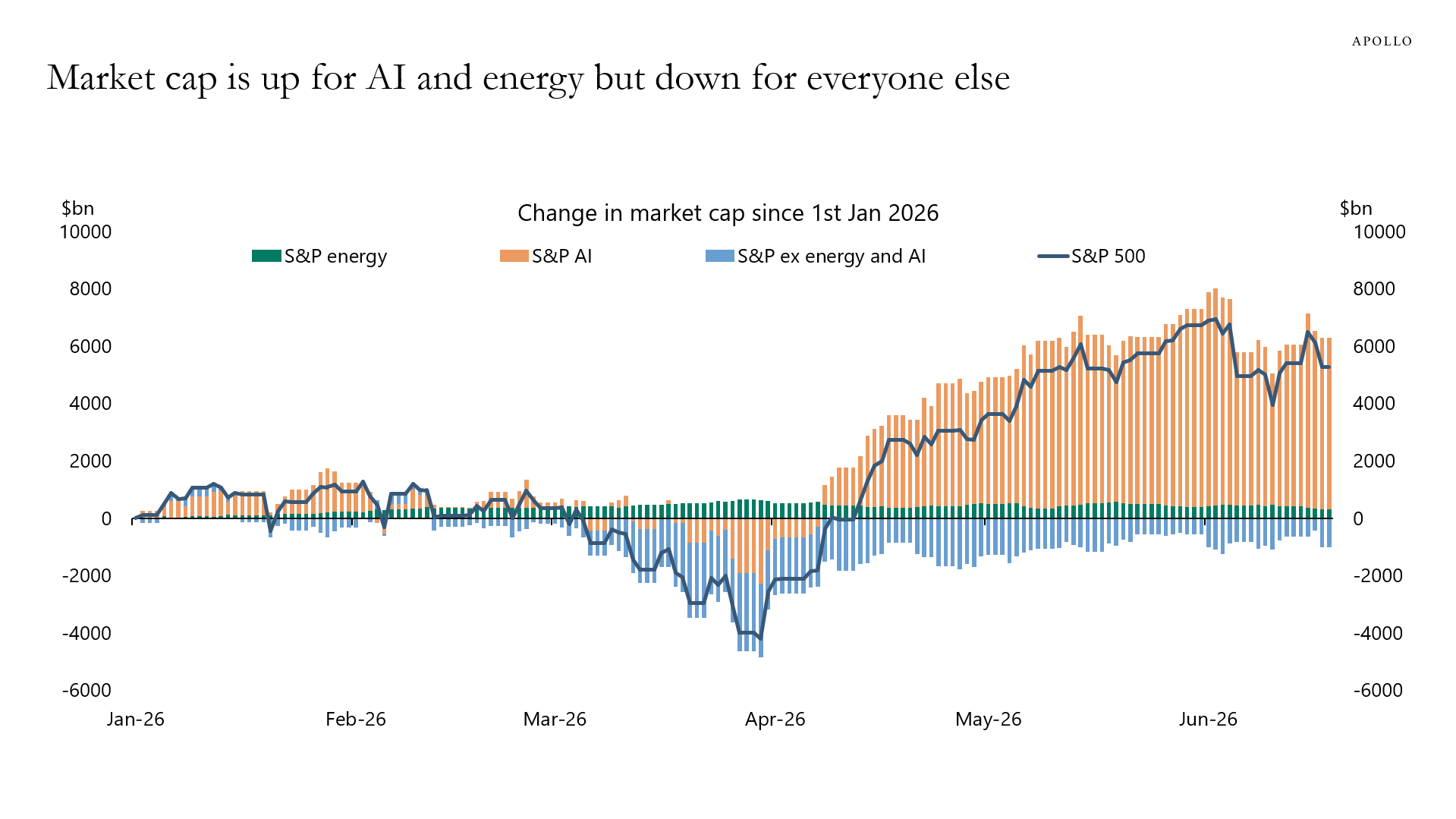
Since January, the entire S&P 500's gains have come from just two corners of the market, AI and energy, while everything else is actually trading at less than where it started, see chart below.
Note: S&P AI is a representative basket of companies with exposure to artificial intelligence technologies and includes 84 companies. These include firms involved in the development and enablement of AI across areas such as semiconductors, software, internet platforms and IT infrastructure. The basket is applied consistently across the full sample period. Sources: Bloomberg, Apollo Chief Economist
See important disclaimers at the bottom of the page.
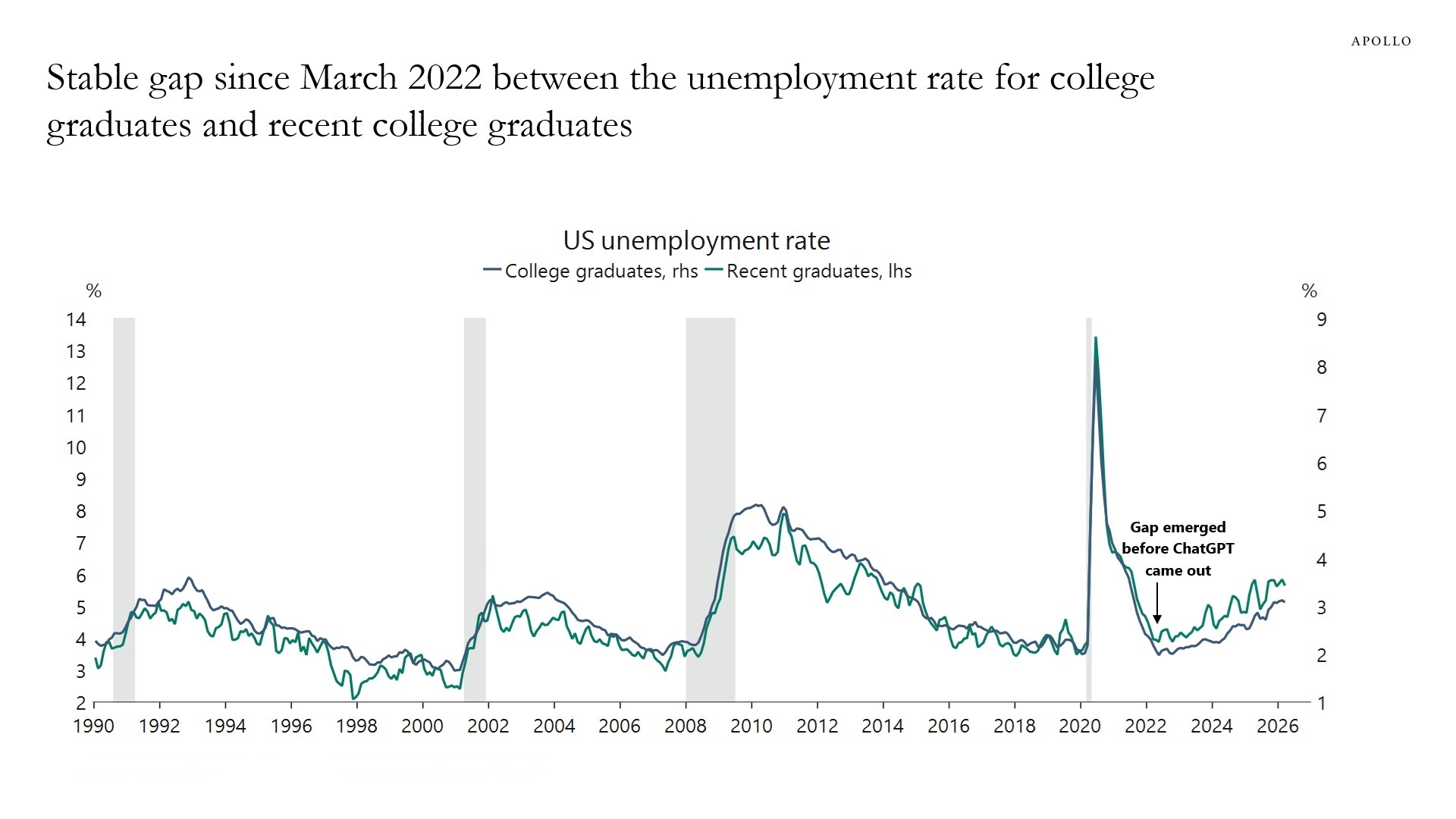
The chart below shows the unemployment rate for recent college graduates rising above the rate for college graduates overall, an unusual gap that has emerged since early 2022.
Many have been quick to blame the gap on ChatGPT's November 2022 release and the broader rise of AI.
But the AI-exposed sectors where these graduates cluster are also the most sensitive to Fed tightening, trade-war uncertainty and slowing immigration, so the entry-level squeeze is far more likely a product of the general low-hire, low-fire labor market than of a technology that companies had barely begun to deploy when the gap emerged, see also here.
Sources: Federal Reserve Bank of New York, Macrobond, Apollo Chief Economist
See important disclaimers at the bottom of the page.
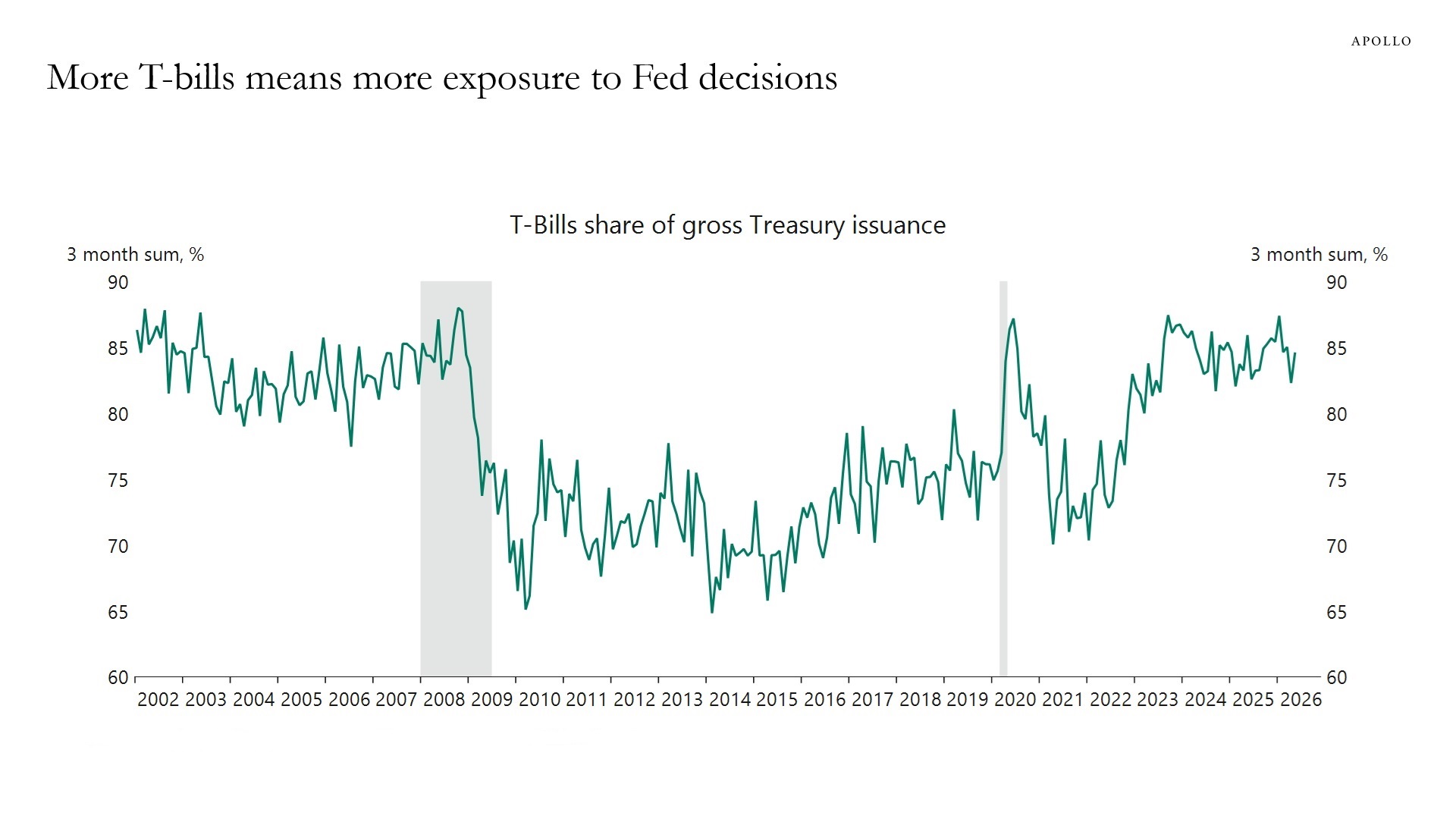
T-bills now account for almost 85% of gross Treasury issuance, near the highest share in over two decades. By tilting issuance toward short-dated debt, the government ties its borrowing costs more closely to the front end of the curve, making its financing increasingly dependent on Fed policy. See chart below.
Sources: SIFMA (Securities Industry & Financial Markets Association), Macrobond, Apollo Chief Economist
See important disclaimers at the bottom of the page.
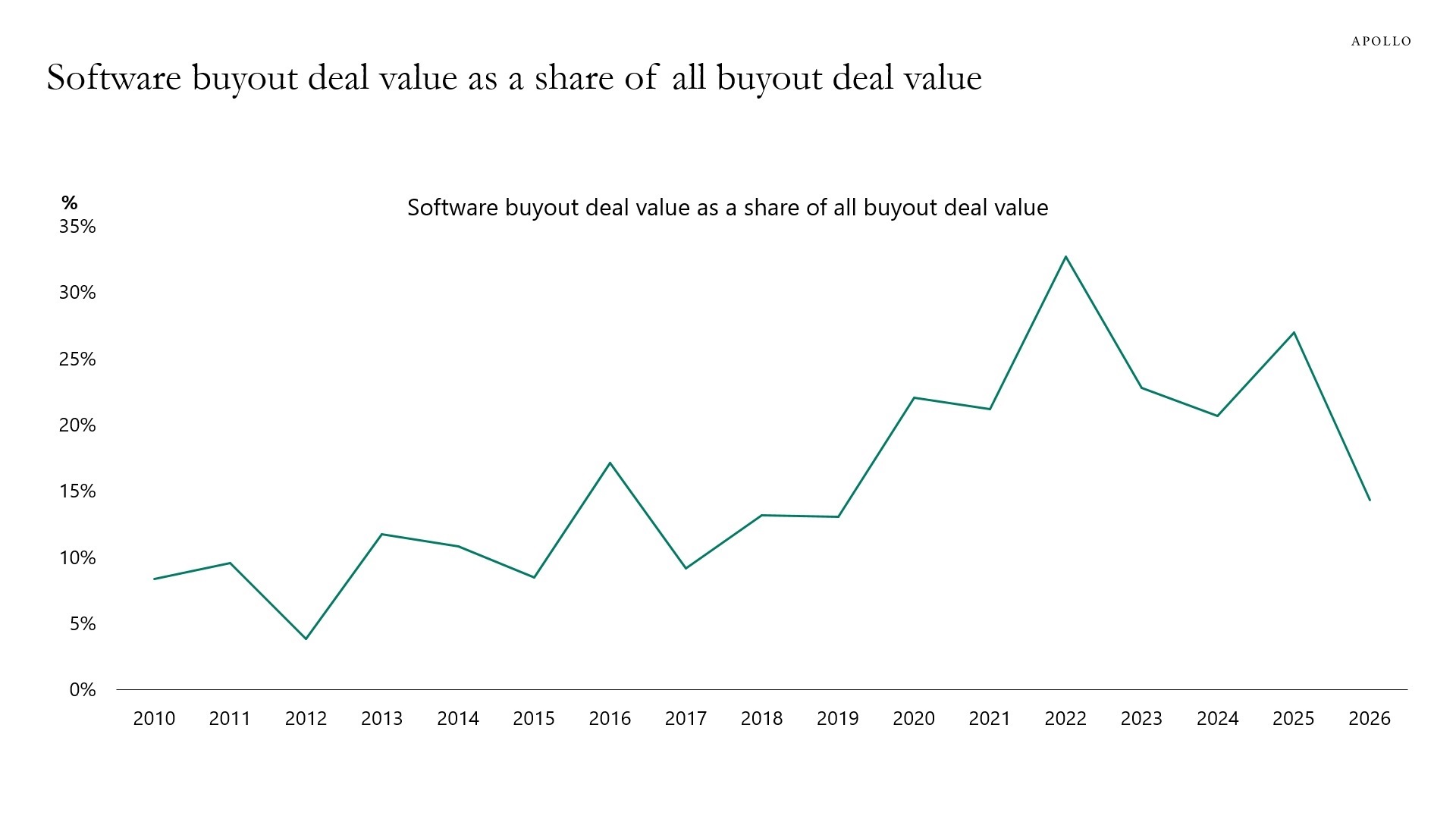
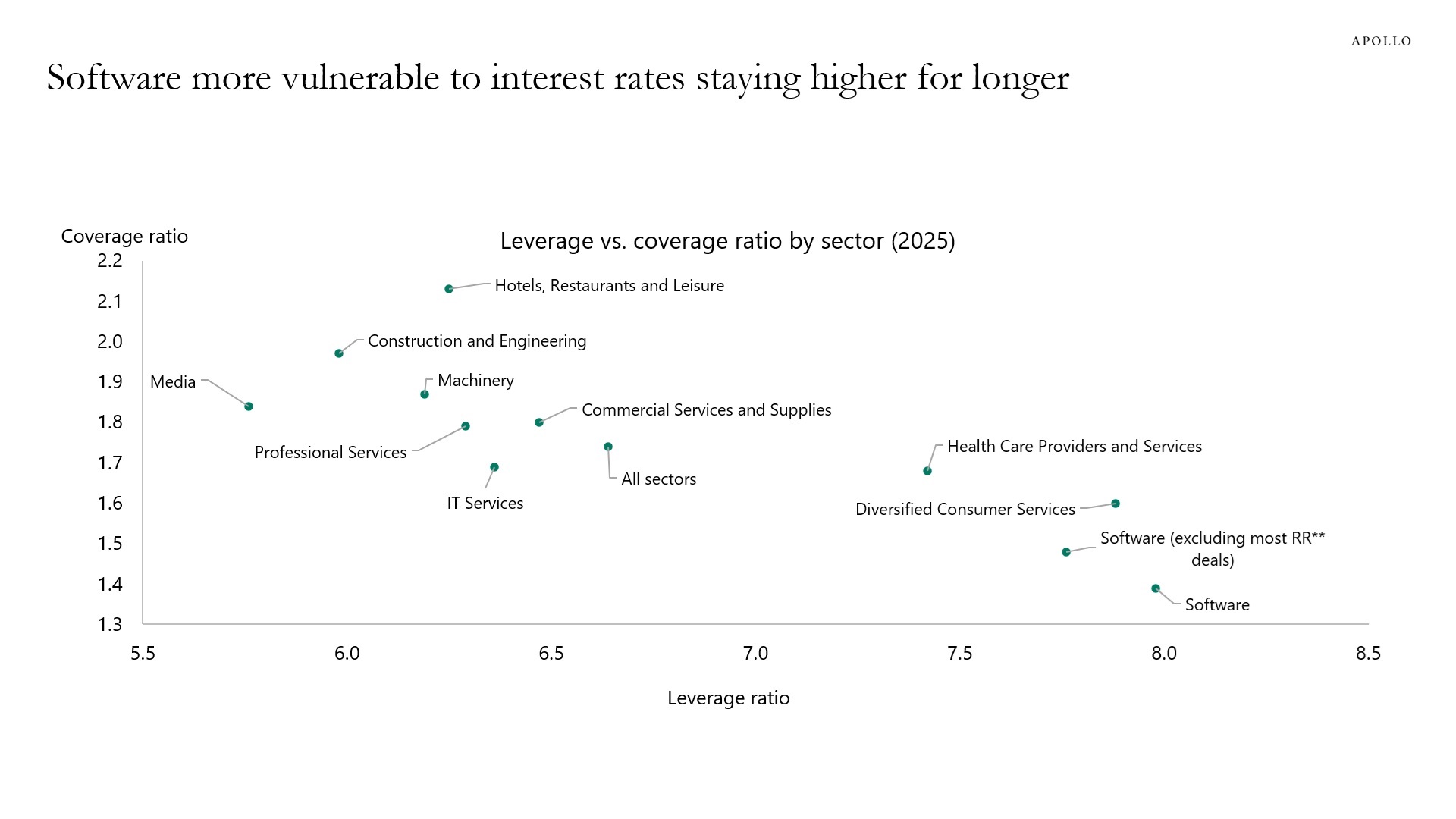
Many software companies are in trouble because AI disruption is eroding the equity value of incumbent business models while higher-for-longer rates strain the debt that financed them.
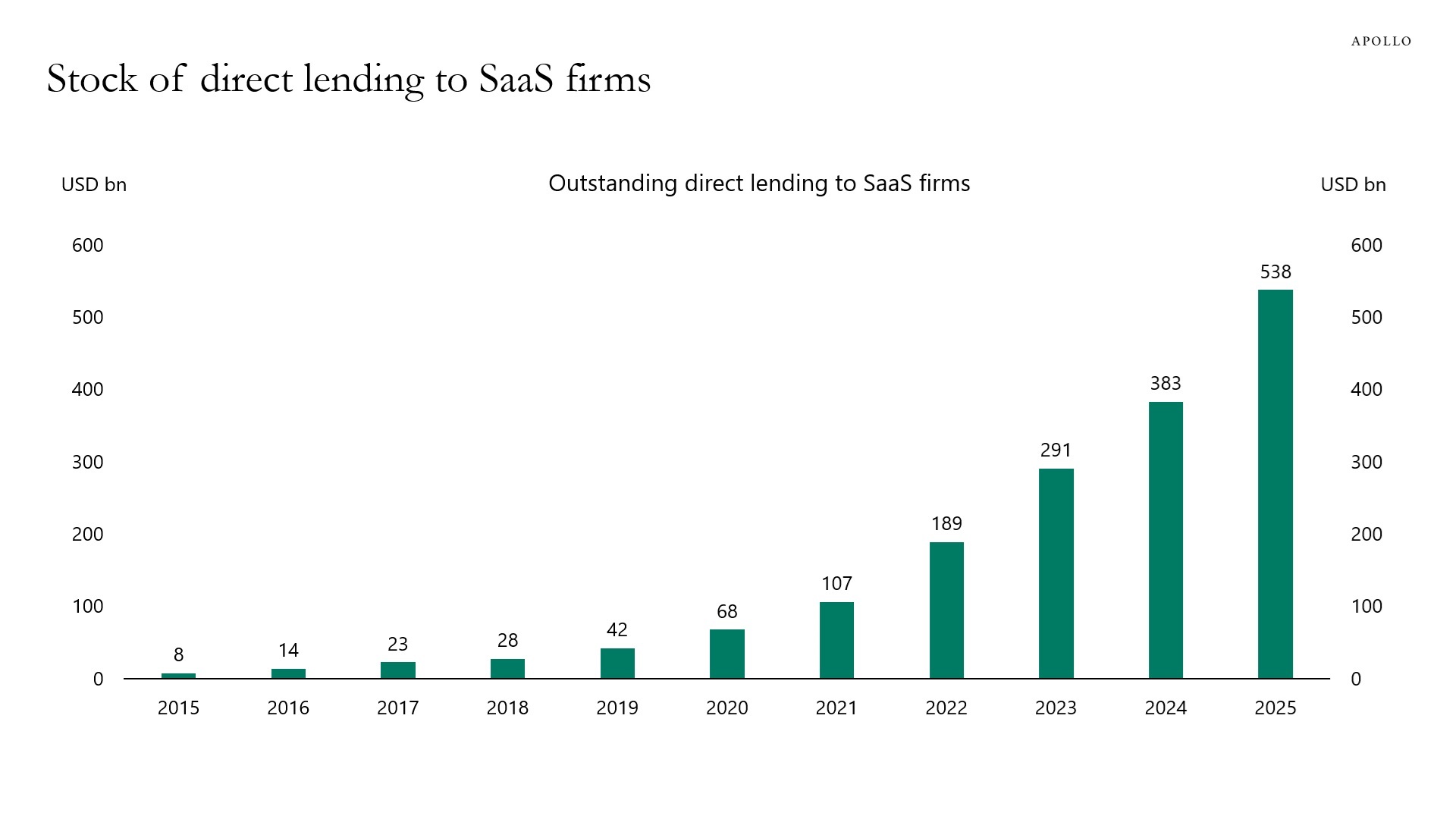
This problem is amplified by the explosive growth in direct lending to SaaS firms, which has risen from $8 billion in 2015 to $538 billion in 2025 and leaves a significant amount of capital exposed to both forces, see charts below.
Sources: PitchBook LCD, Apollo Chief Economist
Note: SaaS firms deliver cloud-based software with recurring subscription revenues. Series shows stock of loans outstanding (USD bn) at year-end. Sources: Bank for International Settlements (BIS) Markets recalibrate amid shifting currents, Apollo Chief Economist
**RR = Recurring Revenue. Sources: S&P Ratings, Apollo Chief Economist
See important disclaimers at the bottom of the page.
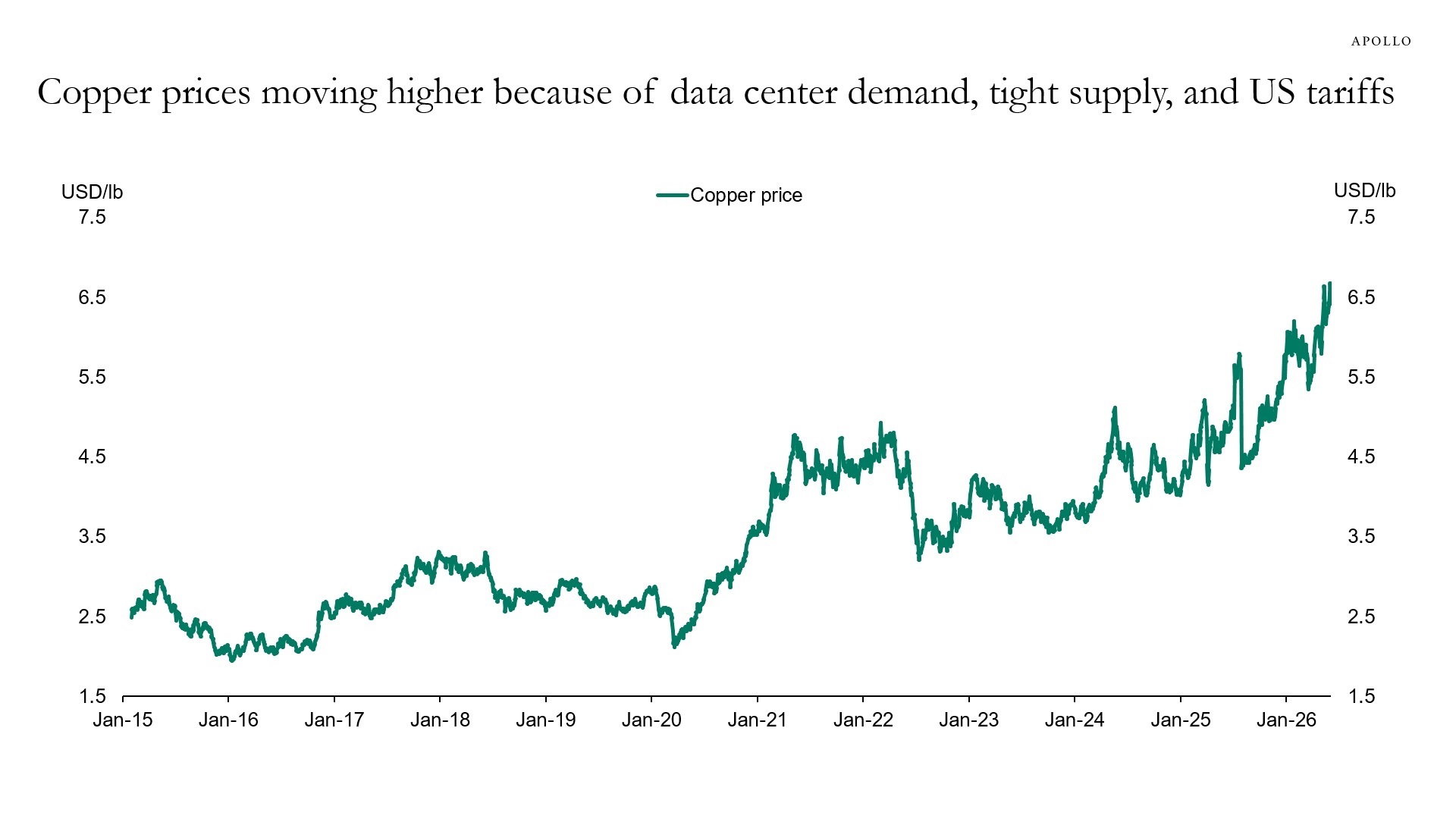
Commodity prices are moving higher across the board, but for different reasons in each segment.
Middle East supply disruptions are lifting energy and fertilizer prices.
The data center buildout, alongside EVs and electrification, is driving demand for base metals like copper and aluminum.
Higher inflation is fueling safe-haven demand for precious metals.
For more, see our chart book available here.
Sources: Bloomberg, Apollo Chief Economist
See important disclaimers at the bottom of the page.
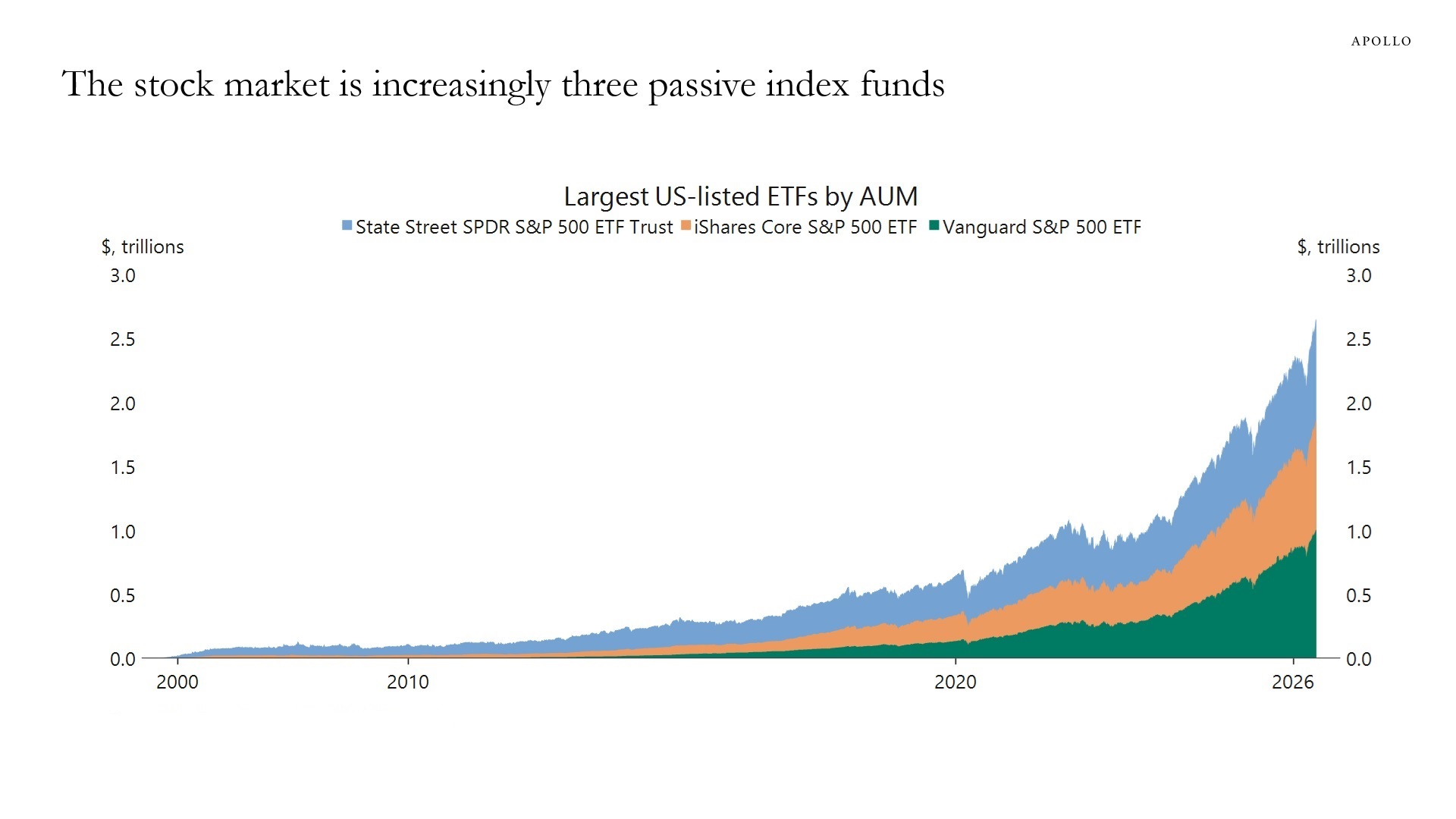
With the three largest passive S&P 500 funds now holding more than $2.6 trillion combined, and Vanguard's VOO alone crossing $1 trillion this month, prices are increasingly set by mechanical flows rather than by anyone judging what companies are actually worth. See chart below.
Sources: Bloomberg, Macrobond, Apollo Chief Economist
See important disclaimers at the bottom of the page.
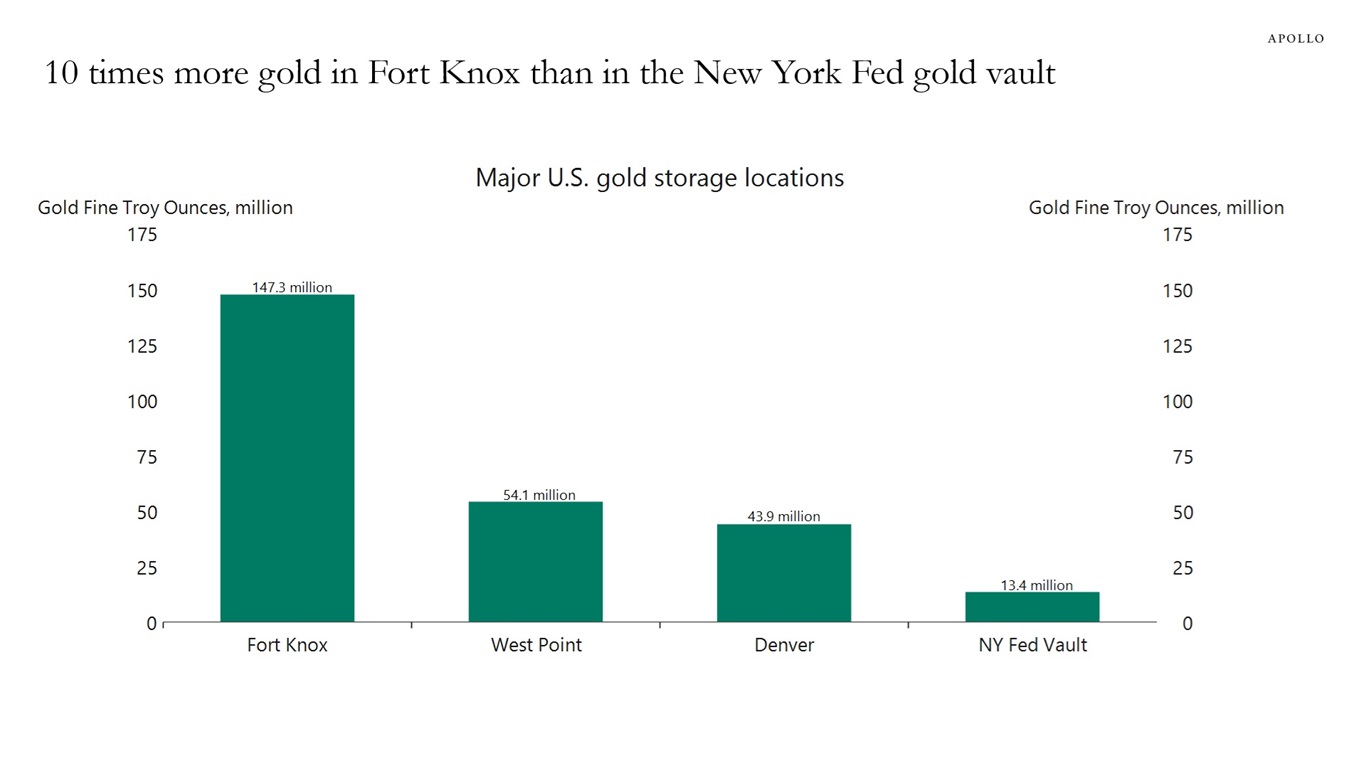
There is 10 times more gold stored in Fort Knox than in the New York Fed gold vault, see chart below.
Sources: US Department of Treasury, Macrobond, Apollo Chief Economist
See important disclaimers at the bottom of the page.